
DNA is one of the most fundamental concepts in biology, genetics, and medical science. If you’ve ever wondered “what does DNA stand for?”, you’re not alone. DNA, or Deoxyribonucleic Acid, is the blueprint of life, carrying all the instructions that make every living organism unique.
In this 2026 guide, we’ll explore DNA’s meaning, structure, functions, real-life applications, and interesting facts to give you a complete understanding of this essential molecule.
What Does DNA Stand For?
DNA stands for Deoxyribonucleic Acid.
Breaking it down:
- Deoxyribo → refers to the sugar component called deoxyribose
- Nucleic → related to the nucleotides, the building blocks of DNA
- Acid → because it contains phosphate groups, making it acidic in nature
Essentially, DNA is a molecule that stores genetic information in all living organisms.
Structure of DNA
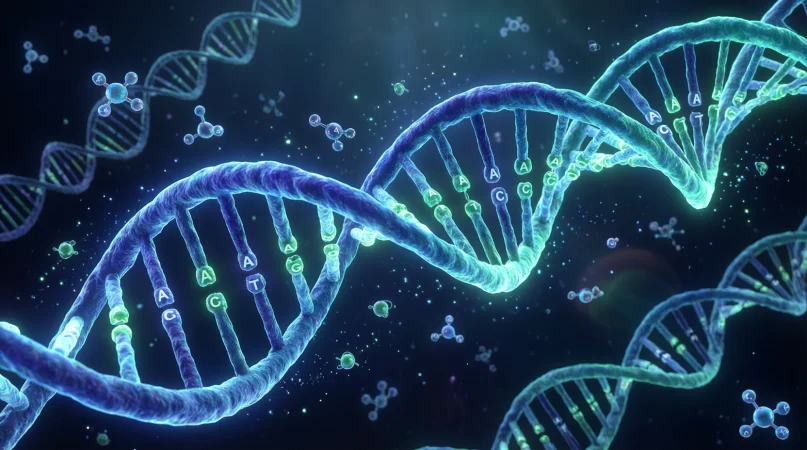
DNA has a unique and elegant structure called the double helix, discovered by James Watson and Francis Crick in 1953. Key components include:
- Nucleotides – the building blocks of DNA, consisting of:
- Sugar (deoxyribose)
- Phosphate group
- Nitrogenous base (Adenine, Thymine, Cytosine, Guanine)
- Double Helix – two strands twisted around each other
- Base Pairing – A pairs with T, C pairs with G
This structure allows DNA to store and transmit genetic information accurately.
Functions of DNA
DNA plays a critical role in life processes:
- Genetic Blueprint – DNA carries instructions for the development, growth, and function of all living organisms.
- Protein Production – DNA contains genes that code for proteins, which perform essential functions in the body.
- Inheritance – DNA is passed from parents to offspring, determining traits and characteristics.
- Cellular Function – DNA regulates cell activities, including replication, repair, and metabolism.
- Evolutionary Role – DNA mutations and variations drive evolution and adaptation in species.
DNA in Everyday Life
- Medical Diagnostics – DNA tests are used for ancestry, paternity tests, and disease detection.
- Forensic Science – DNA evidence helps solve crimes and identify individuals.
- Genetic Engineering – DNA manipulation allows scientists to develop vaccines, genetically modified crops, and gene therapy.
- Personalized Medicine – DNA analysis helps tailor treatments based on genetic makeup.
Interesting Facts About DNA
- The human genome contains approximately 3 billion base pairs.
- DNA is 99.9% identical in all humans; only 0.1% variation makes each person unique.
- If you unraveled all DNA in your body, it could stretch to the sun and back over 600 times.
- DNA was first discovered in 1869 by Friedrich Miescher, long before its structure was understood.
- DNA is not exclusive to humans — all living organisms have DNA, including plants, animals, and microbes.
Common Misconceptions
- DNA vs RNA – DNA stores genetic information; RNA helps in protein synthesis.
- DNA is only in the nucleus – Some DNA is also present in mitochondria.
- Only humans have DNA – Every living organism has DNA, including bacteria and viruses.
FAQs
Q1: What does DNA stand for?
A: DNA stands for Deoxyribonucleic Acid, the molecule carrying genetic information.
Q2: Who discovered DNA?
A: DNA was first identified by Friedrich Miescher in 1869, and its double helix structure was described by Watson & Crick in 1953.
Q3: What is the main function of DNA?
A: DNA stores genetic information, directs protein synthesis, and allows inheritance of traits.
Q4: Is DNA found in all living things?
A: Yes, DNA is present in all organisms, including humans, plants, animals, and microbes.
Q5: How does DNA affect traits?
A: DNA contains genes that determine physical characteristics, biochemical functions, and even susceptibility to diseases.
Conclusion
DNA is far more than just a scientific term it’s the fundamental blueprint of life. Understanding what DNA stands for and its structure and functions helps us appreciate the complexity of living organisms, the inheritance of traits, and advances in medicine and genetics.
Whether you’re studying biology, curious about genetics, or exploring forensic science, DNA is the key to understanding life at the molecular level.